Transcript
TB: Three, two, one.
TB: Okay, so this is Tashara Beavers, and this is for History of the Book, LIS 433. This is my interview. My interviewee is Cody Daniel. He is the Corinth Librarian. Will you introduce yourself, Cody?
CD: Hello, yes, I'm the Corinth Librarian at the Corinth Library, and I've been the Head Librarian here, let's see, four, twelve, no, ten years now.
TB: Wow, that's a lot of years!
CD: Yeah! It's hard to believe.
TB: Alrighty, so I'm gonna ask you a few questions, they are just basic questions.
CD: Okay.
TB: So, firstly, what is your first memory of books?
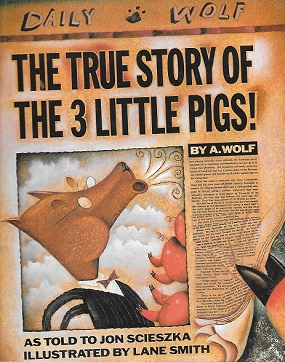
CD: I think it may be the real tale of The Three Little Pigs, I think.
TB: Oh my gosh!
CD: I know there's a picture of my brother and me, and my dad is reading that to us. And, so, that was probably one of our earlier ones that I can remember. And he would always do different voices and stuff.
TB: Aw, that's adorable. How old were you?
CD: Oh, probably maybe five, I mean five I guess?
TB: Okay, okay. Alrighty, so, were books accessible to you when you were a child?
CD: Yes, my mother was a kindergarten teacher.
TB: Oh, okay!
CD: And so, she was kindergarten and first grade, really, for my lifetime until she retired. And so, growing up, we had books in the home for sure at that age range, the Emberly, Ed books. We also had her classroom, so, we had a lot of
CD: When we got to be school-aged, we would go to her classroom instead of going home, so we would spend an hour or so in her classroom y'know doing our homework or whatever, but we had access to books there too while she was finishing up her workday.
TB: Did she have a nap area?
CD: [gasp] Y'know, I, I'm sure she did, if, well, see, by that time she taught the first grade, I think.
TB: Oh!
CD: So maybe, I don't know - I don't remember, I'm sure she did; between reading the books, and going to the gym, and playing on the playground, by you and three other kids, that was pretty cool.
TB: Yeah, sounds really cool.
CD: Yeah.
TB: Okay, so did you read books outside of homework when you were in school?
CD: Actually, not as much. In high school, yes. But in middle school, not a whole lot. I do remember checking out a biography junior biography of Harry Houdini.
TB: Ooo!
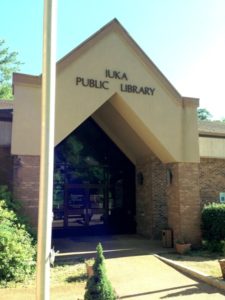
CD: From the Iuka Library. And, because we lived in Iuka, so, I do remember checking that out and that was really cool. I learned that his name wasn't really Harry Houdini, and other things about him. But, my first memory of the library, I guess, probably, would be Iuka Library.
TB: Really? Was that when it was new?
CD: I think it had been there a while, still. I don't know, but, it was, yeah I remember going there. We didn't go there a whole lot when we were younger, because mom had all the books in the home and stuff.
TB: Yeah.
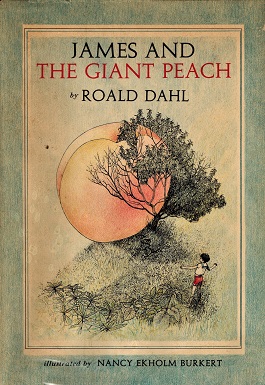
CD: But that and the elementary school library I remember too. James and the Giant Peach was one of my first books.
TB: Oh, that's a good one.
CD: I remember checking out from the school library.
TB: Okay. Alrighty, so, what were some of your favorite picture books?
CD: I have; immediately, I think of Jan Brett. The Christmas Reindeer, I mean, other than The Mitten, the different ones I think, because, which tells the story and obviously there's really beautiful illustrations, but she also has those sidebars on that you can look at and all the intricate little pieces as well.
TB: Oh, okay.
CD: So you can really, it's not, I mean, it's a beautiful picture, but at the same time it's very detailed, and you can spend several minutes looking at one page. And that's one thing we were taught to do as reading stories for sure, but then you can take your time and look for different things.
TB: Yeah! Examine.
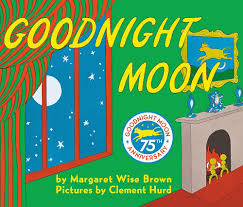
CD: That was, I think, Goodnight Moon was one of my memories.
TB: That's a good one.
CD: Yeah, mom would always have us find little mouse, I think, there was a mouse on every page.
TB: Really!?
CD: I think that's right, if I'm not lying. And so it was the story, but also we would also have to find the mouse on the page, somewhere.
TB: That is really cool. I'll have to look for that mouse. Okay, so we've already covered the first time you've ever encountered a library. So what does the library mean to you now?
CD: Oh, yeah, especially as a librarian now, after these years, because, like I said, in highschool I didn't come into the library as much. But now it's really realizing how much is available.
TB: Yes!
CD: Obviously, one first thinks about the books available. That was one of my first, when I was in Highschool, realizing Stephen King was what I wanted to read. And I remember going to the bookstore and thinking, well, there's no way I can go ahead and get all these books, and I remember coming into the library and thinking, well, I can get all of these books.
TB: Mmhm!
CD: And so that was really cool. So, yeah, having access to the books to read just for fiction books was fun.
TB: Yeah. Mmhm.
CD: But then after working here, for over the years, it's also been obviously a way to, well, the nonfiction side for me has been a large influence on my own personal reading, and journey, and whether it's learning or faith or whatever, I've been able to get some things I've never thought I've ever gotten from titles.
TB: Right!
CD: Certainly. And then, of course, there's the whole non-book side of the library.
TB: Yes!
CD: That is, we get to see it as staff members. People that come in that don't have a computer, or don't have computer skills at all, or are looking for a job or something and we—how important even faxing something is. People still ask us do we do faxes all the time. And how important that is, whatever document it is, it's important to that person right now because they need to get this done for whatever serious thing they need to do.
TB: Mmhm.
CD: And realizing how, I would say, crucial it is to so many people.
TB: Yes.
CD: To be able to have a place where they can use all the different services together. And we get to see that on this side of the desk.
TB: Mmhm. Okay. One last question. What do books mean to you now. Did they impact your life?
CD: Oh, absolutely. One of the ones, the first, one of the first books that I remember that we did read in school was The Giver by Lewis Lowery. And that was probably the first book that made me realize that books can do other things besides tell a good story. Because that was one that you really, it brought up a lot of questions about reality and how we perceive things, and then there's the whole political side of how do we run a society and that kind of thing, so, that was one of the big eye opening moments for me. I guess I was probably in 7th grade.
TB: Oh, okay.
CD: And so, yes, books definitely they deepen you, and I think C.S. Lewis says something along the lines of, I want to see through other's eyes, and so books are like windows that we can see through other's eyes, but he said that I'm not satisfied with learning what other people know, I want to know what other people have dreamed. The quote isn't exactly right, but,
TB: That's a really cool quote.
CD: But the idea, y'know, learning, but also seeing what people have imagined and the way, I think it's really fascinating, the fact that our species is a species that transmits itself through story. And so, being, I was a stage person, a community theater person in high school, so, telling the story, theater and drama, that was always a big influence for me too. And so, books are another medium aspect of that.
TB: Yes. Mmhm.
CD: Of storytelling. And, so, I have to leave with another quote, from Mortimer Addler, because we live in a world, where, and I'm guilty of this too, where we track all of the books that we read, and how many books have I read this year, but Mortimer Addler said, something along the lines of,
"It's not how many books you get through, it's how many books get through you."TB: Oh, that's deep.
CD: And so I always have to remind myself of that. And his biography is one I've seen at the library, so.
TB: Oh! Okay. Alrighty, so thank you for the interview, it's very much appreciated.
CD: Thank you, appreciate you.
TB: And that concludes the interview. Thank you.